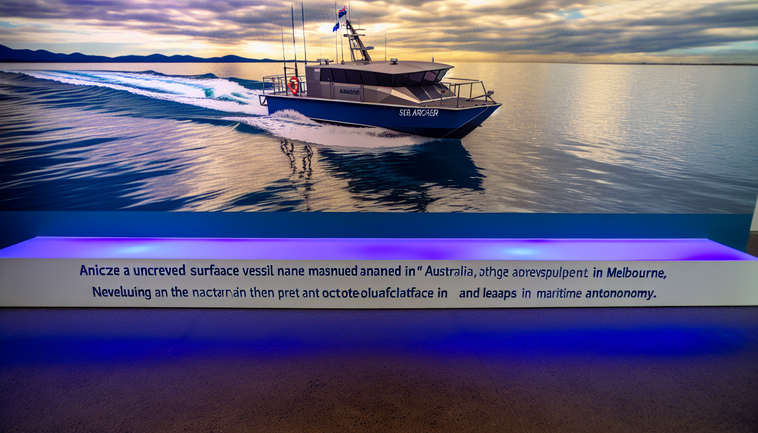
Australia is accelerating its journey into maritime autonomy with the local construction of Sea Archer, a compact uncrewed surface vessel developed by Leidos. Built in Melbourne, this platform represents a homegrown embodiment of high-tech naval innovation, designed to operate without onboard crew while handling surveillance, reconnaissance, and routine tasks at sea.
Sea Archer boasts advanced sensors, real-time data links, and modular payload bays that can be tailored to a wide range of missions. Its lightweight hull and efficient propulsion system enable extended endurance, allowing naval and coast guard units to deploy the vessel for days or even weeks without direct human intervention, reducing operational costs and risk.
From a strategic standpoint, Australia’s investment in uncrewed platforms underscores a broader shift toward distributed maritime operations. Small USVs like Sea Archer can operate alongside larger ships and aerial drones, creating a layered approach to domain awareness that can detect incursions or environmental hazards far beyond the horizon.
The decision to build Sea Archer on Australian soil also carries significant economic and industrial benefits. Local shipyards and technology firms gain expertise in autonomous systems, fostering a skilled workforce and positioning the country as a regional center for uncrewed vessel development and maintenance.
In the context of the Australia-Pacific region, where maritime routes are vital for trade and security, having a fleet of agile, networked USVs enhances deterrence and response capabilities. These vessels can patrol remote archipelagos, support humanitarian missions, and gather intelligence in contested waters without putting sailors at immediate risk.
Of course, integrating uncrewed vessels into existing fleets brings challenges: ensuring robust cybersecurity, establishing clear rules of engagement, and harmonizing communication protocols between manned and unmanned units. Successfully addressing these hurdles will be crucial for Sea Archer and its successors to achieve full operational integration.
Looking ahead, Sea Archer’s rollout marks more than just the delivery of a new naval toy—it signals Australia’s commitment to redefining maritime operations through autonomy. By embracing uncrewed technology today, the nation is setting the stage for safer, smarter, and more sustainable stewardship of its vast maritime domain.