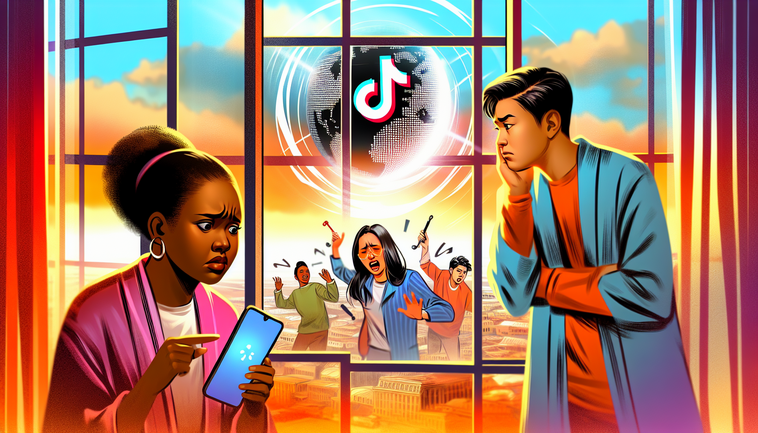
Across the globe, millions of TikTok fans found themselves frozen mid-scroll last week as the app abruptly went dark. Morning routines were disrupted, creators couldn’t share their latest dance challenges, and the hashtag #TikTokDown began trending within minutes. Users from New York to New Delhi reported sudden disconnects, underscoring just how central short-form video has become in our daily lives.
In the hours that followed, TikTok’s engineering team issued a concise statement attributing the disruption to an internal network configuration update gone awry. According to the company, a routine adjustment intended to optimize server traffic instead triggered an unexpected routing loop, temporarily severing connections to key data centers. TikTok assured its audience that no external breach had occurred and that full service was restored in under three hours.
On a technical level, this incident serves as a reminder of how even well-tested changes can ripple through complex global infrastructures. Large platforms routinely apply fine-tuning to improve speed and capacity, but each tweak carries risk. When timed or deployed incorrectly, a single misstep can snowball—taking down services that billions rely on for entertainment, social interaction, and even commerce.
User reaction was swift and, at times, playful. Many took to Twitter to share GIFs of buffering screens, while meme creators seized the moment with jokes about the “silent scroll.” A handful of rival apps boasted minor upticks in sign-ups during the blackout, though they were quick to note that once TikTok blinked back online, most users returned to familiar territory.
Beyond the immediate inconvenience, this outage sparks questions about the fragility of digital ecosystems. When an update in one part of the world can disrupt video feeds everywhere, it highlights just how tightly interwoven our online platforms have become. The incident underscores the need for robust contingency measures and more granular rollback capabilities whenever large-scale changes are introduced.
For TikTok, the path forward will depend on bolstering both its technical safeguards and its communication strategy. Transparent post-mortems, clearer timelines for fixes, and perhaps even a public dashboard tracking system health could go a long way in restoring confidence. After all, in an environment where every second offline feels like an eternity, users value both reliability and honesty from the services they depend on.
Ultimately, this brief blackout offers a valuable lesson: as our digital lifestyles deepen, so does our collective vulnerability to infrastructure hiccups. But out of each disruption arises an opportunity—to strengthen systems, refine protocols, and reinforce the trust that underpins our daily interactions in the digital sphere. In that spirit, we’ll watch closely as TikTok and its peers evolve to meet the growing demands of a world that simply can’t afford to stop scrolling.