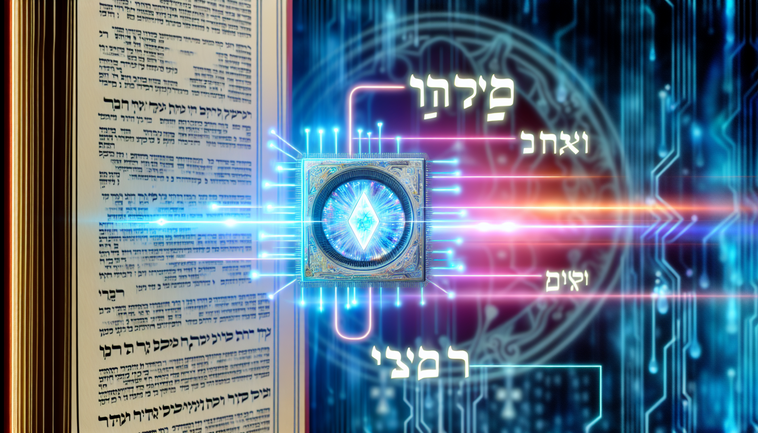
In a groundbreaking fusion of technology and theology, researchers have harnessed artificial intelligence to dissect the first nine books of the Hebrew Bible, revealing three remarkably distinct writing styles. By treating these sacred texts not just as divine scripture but as literary artifacts, AI has exposed patterns that human scholars have long suspected but could not conclusively prove. This study marks a new chapter in biblical scholarship, one where algorithms complement centuries of traditional analysis.
For generations, scholars have debated the authorship of the Torah, pointing to stylistic and thematic variations as evidence of multiple sources. While the Documentary Hypothesis remains influential, definitive proof has often eluded experts. Now, machine learning offers fresh ammunition: data-driven insights that quantify differences in vocabulary, syntax, and sentence structure across these foundational texts.
The research team employed advanced stylometric techniques, training neural networks to recognize subtle linguistic fingerprints. By feeding the AI thousands of text samples, the system learned to differentiate between authorial habits—such as preferred conjunctions, recurring phrases, and even rhythmic patterns in the Hebrew. The result was a clear clustering of passages into three distinct groups, supporting the idea of separate scribal schools or compositional traditions.
One cluster leans toward a formal, ritualistic tone, emphasizing genealogies and legal codes, while another exhibits a more narrative-driven voice, rich in vivid descriptions and dialogue. The third group weaves theological commentary and prophecy with philosophical reflections. These stylistic divisions may correspond to different geographic centers, historical periods, or social circles of scribes and scholars who contributed to these ancient works.
Unsurprisingly, the findings have stirred excitement and debate. Traditionalists worry that such analyses might undermine faith-based perspectives, while modernists view AI as a powerful ally in unraveling historical complexities. Both camps, however, can agree that understanding the compositional layers of the text enriches our appreciation of its depth and resilience across millennia.
From my perspective, this marriage of digital humanities and biblical studies underscores the importance of interdisciplinary collaboration. AI does not arrogate to itself theological authority but serves as an illuminating tool, highlighting patterns that invite further contextual and philological exploration. At the same time, scholars must guard against overreliance on algorithmic outputs, remembering that cultural nuance and historical context remain indispensable.
Ultimately, this AI-driven revelation offers more than academic intrigue—it invites readers to engage with the Hebrew Bible as a living mosaic, shaped by multiple voices and evolving interpretations. As technology advances, we stand at the threshold of new discoveries that honor both the human and the divine dimensions of these ancient texts. In that convergence of tradition and innovation, we find fresh pathways to wisdom and wonder.